Crank-Connecting Rod Systems: From al-Jazari to the Industrial Revolution
How a 12th-century mechanical innovation became the foundation of modern engines
Introduction
One of the most transformative mechanical principles in human history is the crank-connecting rod system — a device that converts continuous rotary motion into linear reciprocating motion (and vice versa). While simple in concept, its practical application unlocked the power of engines that drove the Industrial Revolution.
The earliest fully developed and documented use of this mechanism in a continuously operating machine appears in the work of Ismail al-Jazari in 1206, nearly three centuries before it re-emerged in Europe.
Al-Jazari’s Innovation (1206)
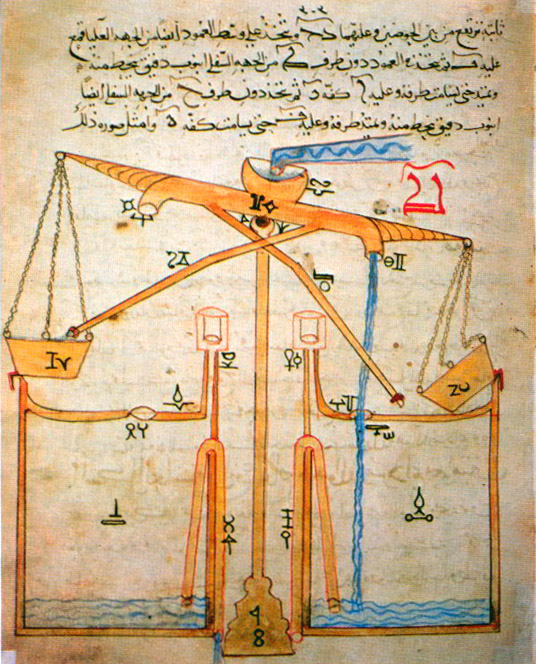
In his famous treatise The Book of Knowledge of Ingenious Mechanical Devices, al-Jazari incorporated the crank-connecting rod system into two water-raising machines, most notably a remarkable twin-cylinder double-acting reciprocating piston suction pump.
A water wheel provided rotary motion that turned a shaft fitted with cranks. Connecting rods then transferred this motion to two opposing pistons, creating a smooth, continuous pumping action. This was the first known machine to combine a true crankshaft with connecting rods for practical, sustained operation.
The Mechanical Principle
The genius of the system lies in its ability to convert circular motion into linear motion efficiently. This elegant solution enabled continuous power transmission and became one of the foundational mechanisms of the Industrial Revolution.
Legacy in Modern Engineering
Today, the crank-connecting rod system (and its evolved form, the crankshaft) lies at the heart of almost every reciprocating engine — from steam engines to internal combustion engines in cars, ships, and aircraft.
Al-Jazari’s application of this mechanism alone entitles him to a place of honor in the history of engineering.
This article is part of an independent, non-commercial research project. All content is provided strictly for educational and informational purposes only.
© 2026 Jazari Institute — All rights reserved for original content.